current offers & selected works
practising, teaching, writing.
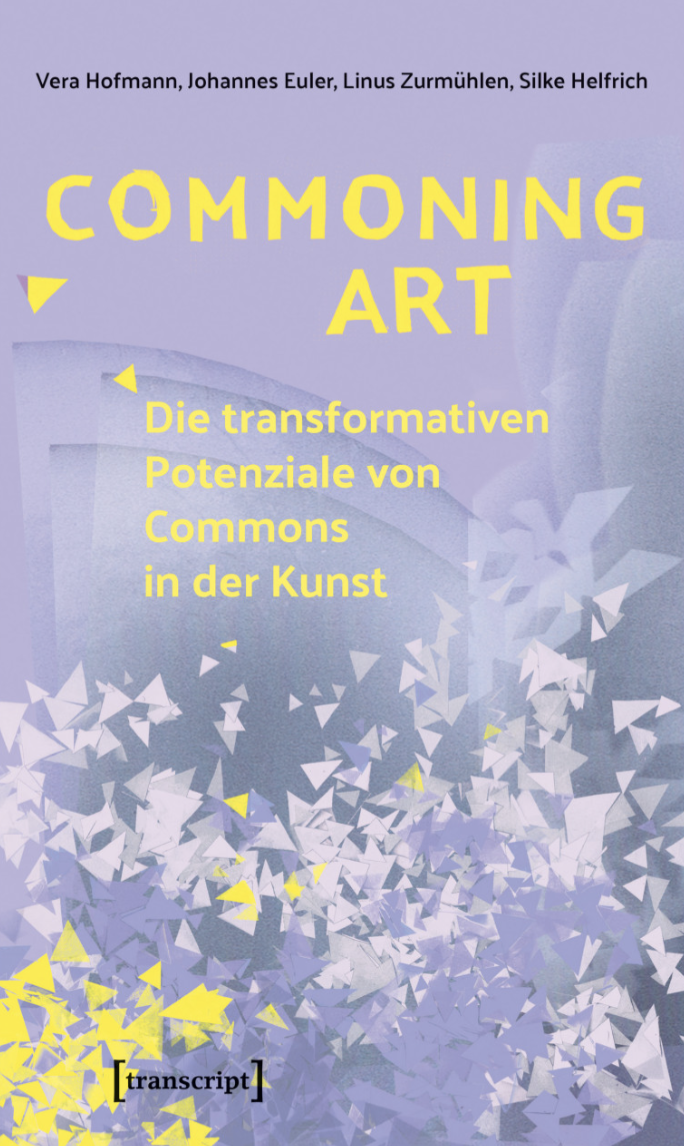
Texte, Interview und Podcast zu Commoning Art:
Podcast: Kunst und Commonisierung: Für einen Kulturbetrieb von allen für alle, Dissens Folge 296
Kurztext: Commons und Commoningstrategien in der Kunst – eine erste Sortierung, Staub zu Glitzer, Organizing Cultural Commons
Interview: „Fürsorgende Selbstorganisation in Kunst und Kultur durch Commoning“, Kultur Management Network Magazin, Ausgabe 170, 2023
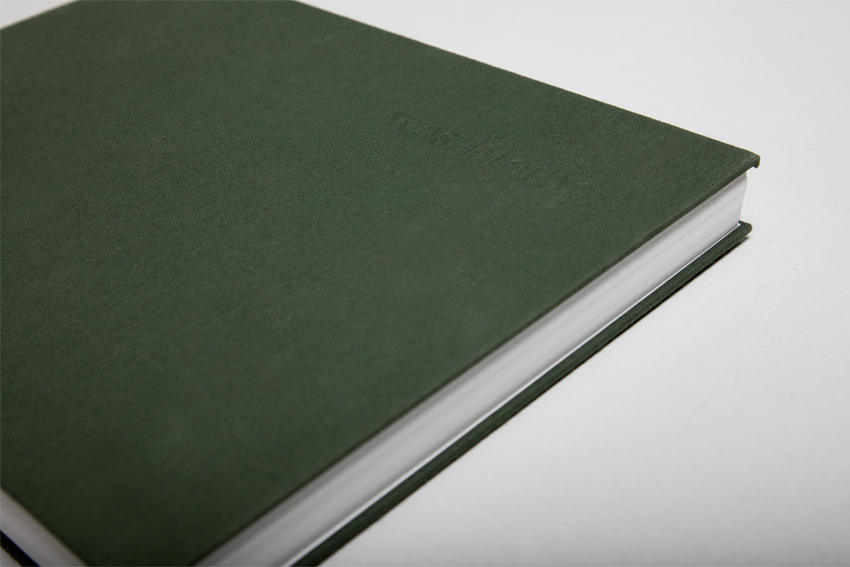
Diese Publikation ist in gedruckter Form erhältlich oder als kostenloses open access PDF.
The book is available in a printed version and as a PDF.
Auf Selbstorganisation und Fürsorge basierende Commons-Ansätze eröffnen auch der Kunst Chancen zur Veränderung und Transformation. Aber wie kann Gemeinschaffen – Commoning – in der Kunst gelingen? Das transdisziplinäre Autor*innenteam verbindet die aktuelle Commons-Forschung mit feministischen, queeren, postkolonialen und ökosozialen Perspektiven. Mit der Analyse von Kunst für Commons, Kunst als Commons und Kunst durch Commoning sowie entlang konkreter Projekte werden Thesen und Werkzeuge formuliert, die Orientierung und Inspiration für die eigene Praxis bieten können.
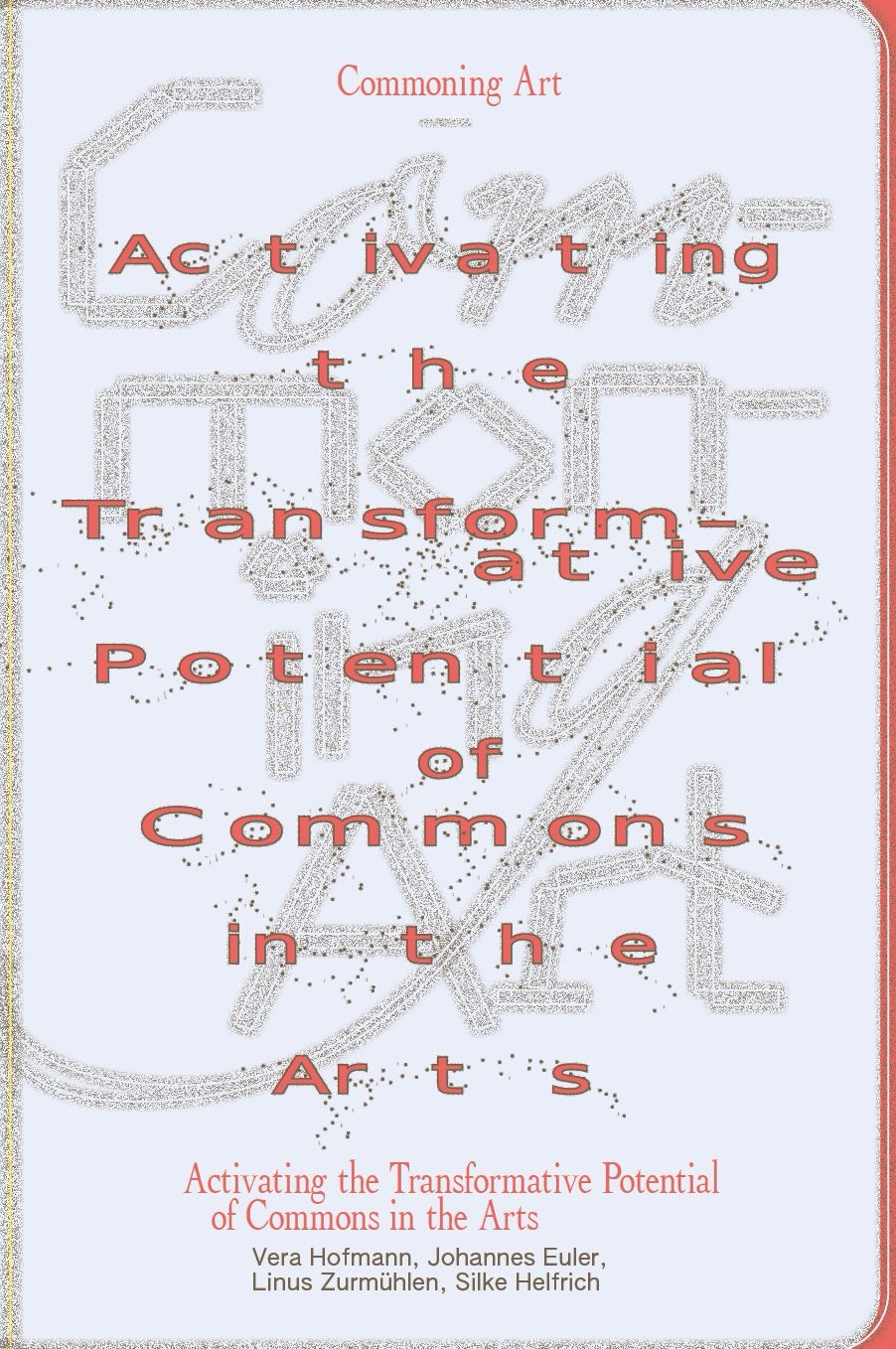
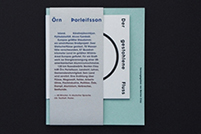
Vera Hofmann, Johannes Euler, Linus Zurmühlen, Silke Helfrich:COMMONING ART – ACTIVATING THE TRANSFORMATIVE POTENTIALS OF COMMONS IN THE ARTSSet Margins', 2026Commoning Art brings contemporary commons and art discourses into dialogue through feminist, queer, ecosocial, and critical studies perspectives. It outlines three positions in current practice: Art for Commons, centering the commons as a political and aesthetic concern; Art as Commons, challenging ownership and copyright; and Commoning Art, approaching art as an ongoing process of collective self-organization.
Drawing on a variety of situated examples from artistic and curatorial practice, the transdisciplinary team of authors develops a methodology that advances an ontological reorientation of art, shifting away from the myth of individual autonomy toward forms of practice grounded in relationality and interdependence. From this perspective, art is understood as infrastructure that is collectively sustained through commoning processes of care, shared responsibility, and collective decision-making. Commoning Art opens pathways toward legal, organizational, and material conditions that allow cultural work to be sustained with greater stability and reduced dependence on market- and state-based arrangements.
curatorial work, project management, archival and editorial work, writing, lectures.
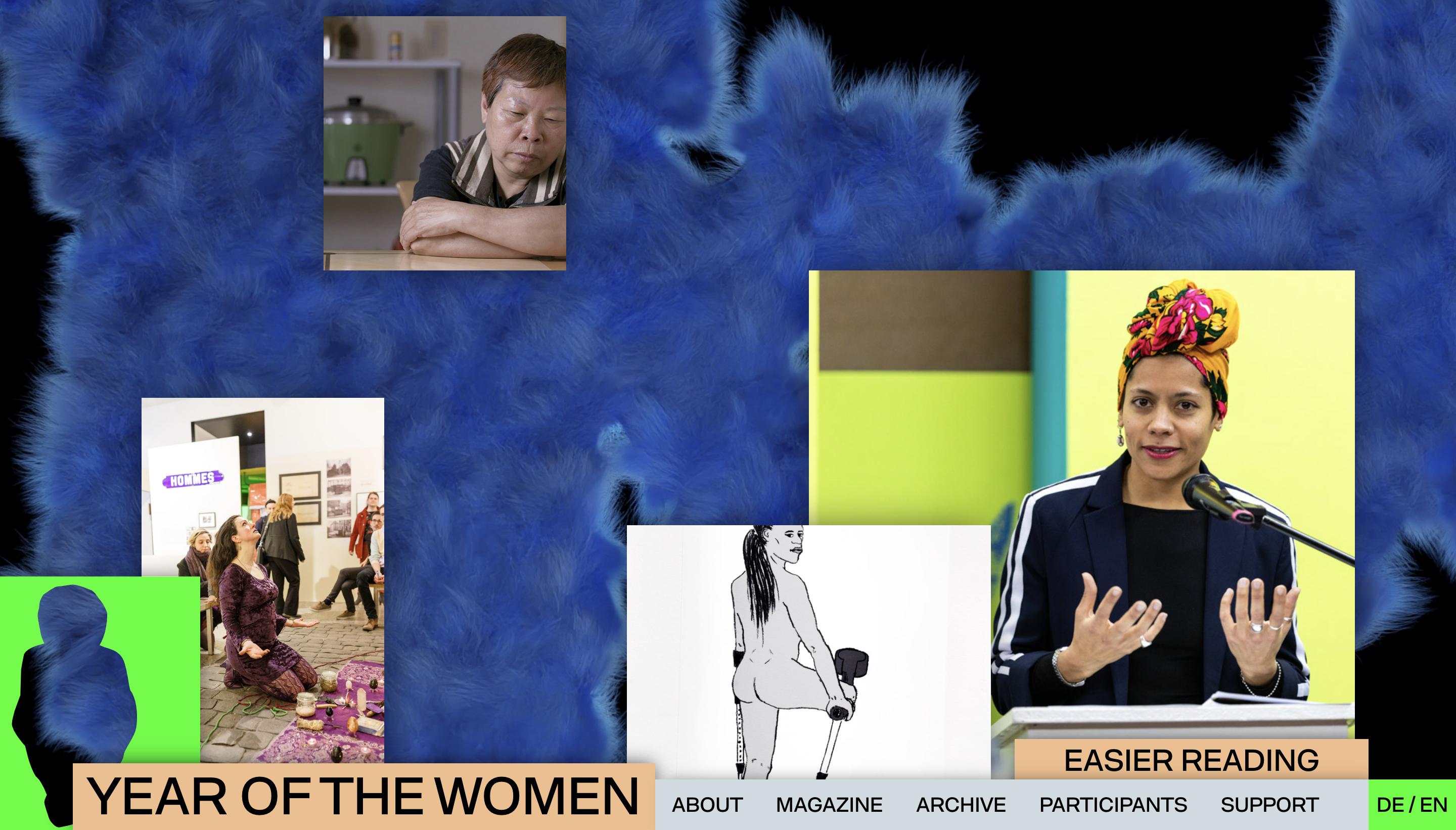
archive + magazine – yearofthewomen.netonline platform + pdf, English and German
This website archives and accompanies the YEAR OF THE WOMEN*, the yearlong queer feminist intervention at the Schwules Museum in 2018. The Schwules Museum is the world's largest institution for art, curatorial research, collecting, archiving, and communicating LGBTQIA+ history_ies and culture. The intervention aimed to establish women*, lesbians, inter*, non-binary, trans*, and agender people (WLINTA*) as members of the museum community and authors of their own representation within it. It also sought to embed community-backed queer-feminist, anti-racist, intersectional policies in the structures and values of the museum. This platform offers various perspectives that allow for a detailed overview of the project. The YEAR OF THE WOMEN* served as a point of crystallization and change for the Schwules Museum. This program has been the only one of its kind within an institutional framework up to this point.
more
What happens when feminist and queer care ethics are put into curating practice? What happens when the notion of care based on the politics of relatedness, interdependence, reciprocity, and response-ability informs the practices of curating? Delivered through critical theoretical essays, practice-informed case studies, and manifestos, the essays in this book offer insights from diverse contexts and geographies.more
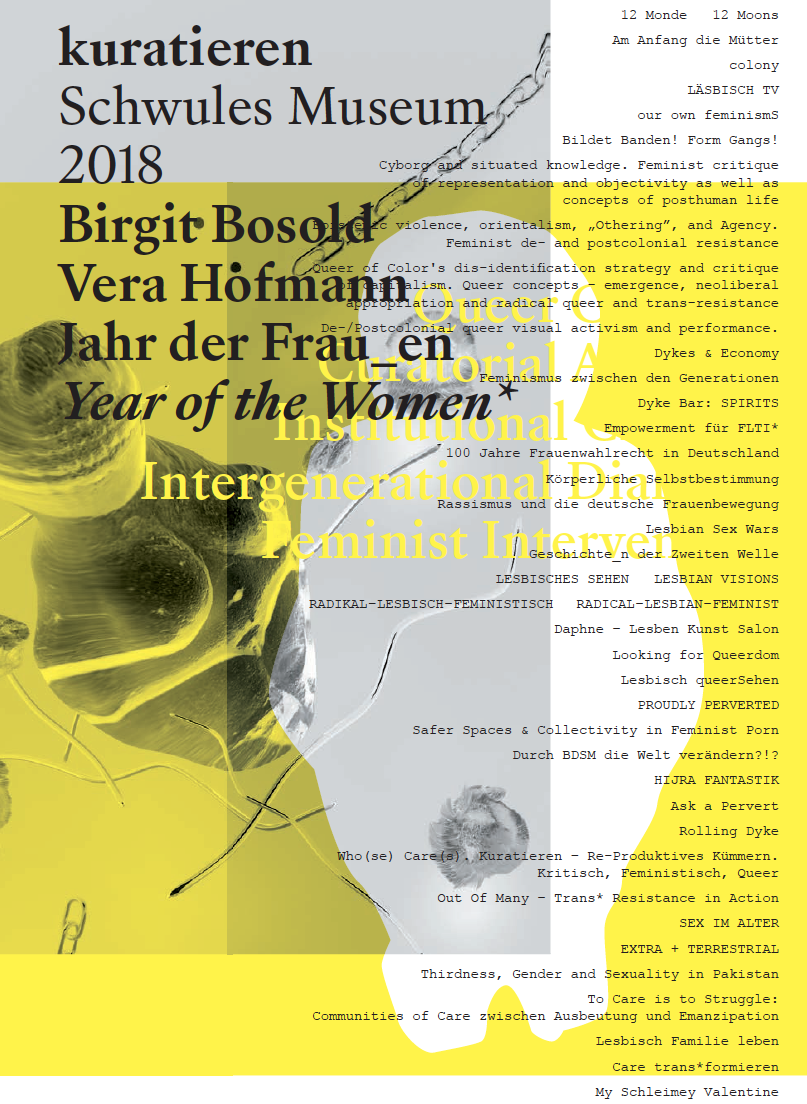
Birgit Bosold, Vera Hofmann:kuratieren #7: Year of the Women*, Schwules Museum 2018Verlag der Arthur Boskamp-Stiftung, 2021text in English and GermanEdited by Ulrike BoskampISSN: 2510-2273In 2018, the Schwules Museum transmitted a strong signal against sexism and the marginalization of women* in art, culture and the queer communities by dedicating its entire annual program to female, lesbian, trans, inter and nonbinary perspectives under the title Jahr der Frau_en / Year of the Women*. Almost two years later and all the richer in experience Birgit Bosold and Vera Hofmann are attempting a dialogical reflection on this queer-feminist intervention, which they directed together. They briefly introduce the project and then illuminate some of its background information in the form of a honest dialogue to render transparent the complexity and contradictions, controversies and concurrences of their shared curating.
Year of the Women*
year-long intervention, Schwules Museum, Berlin, DE, 2018-2019
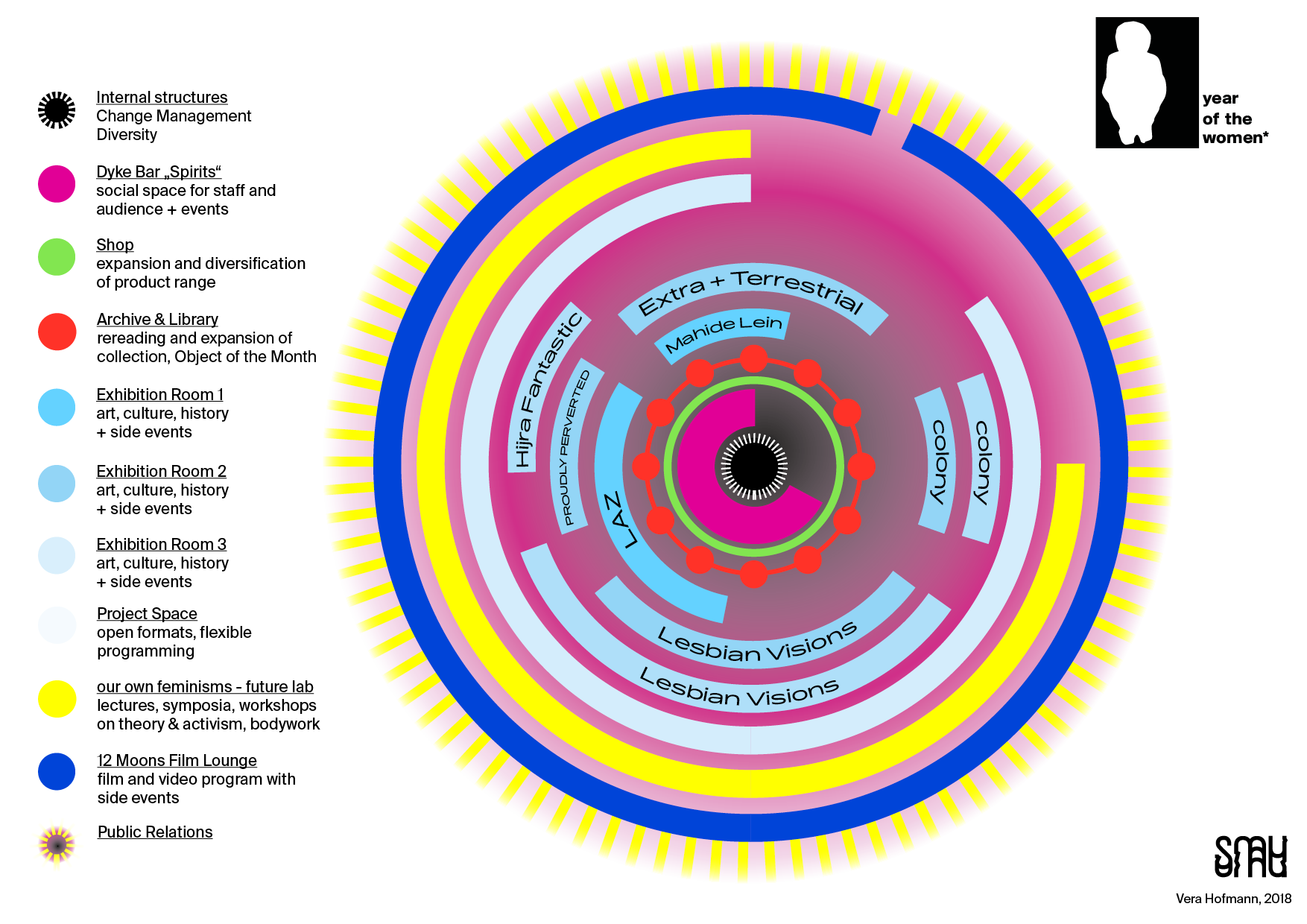
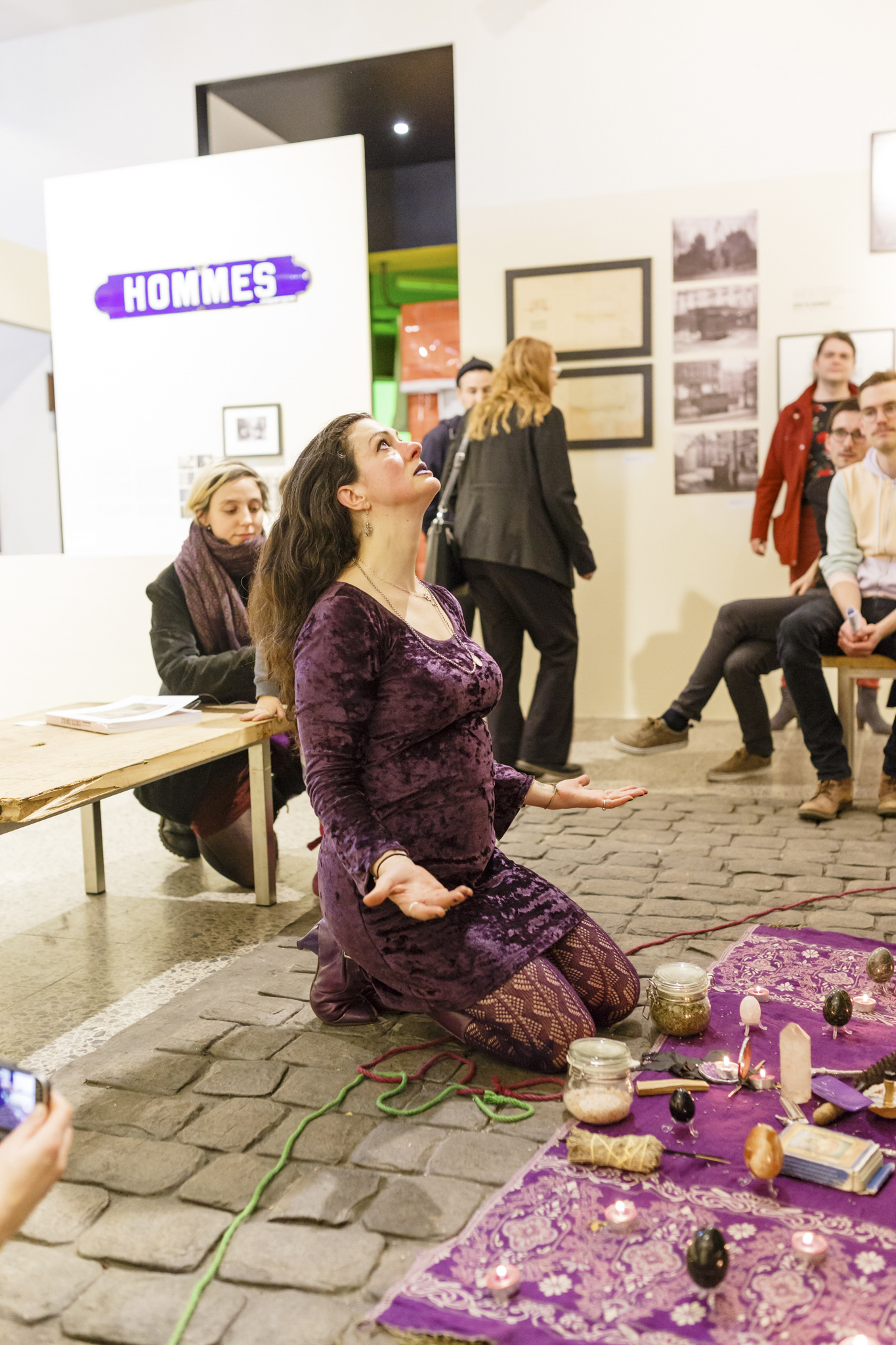
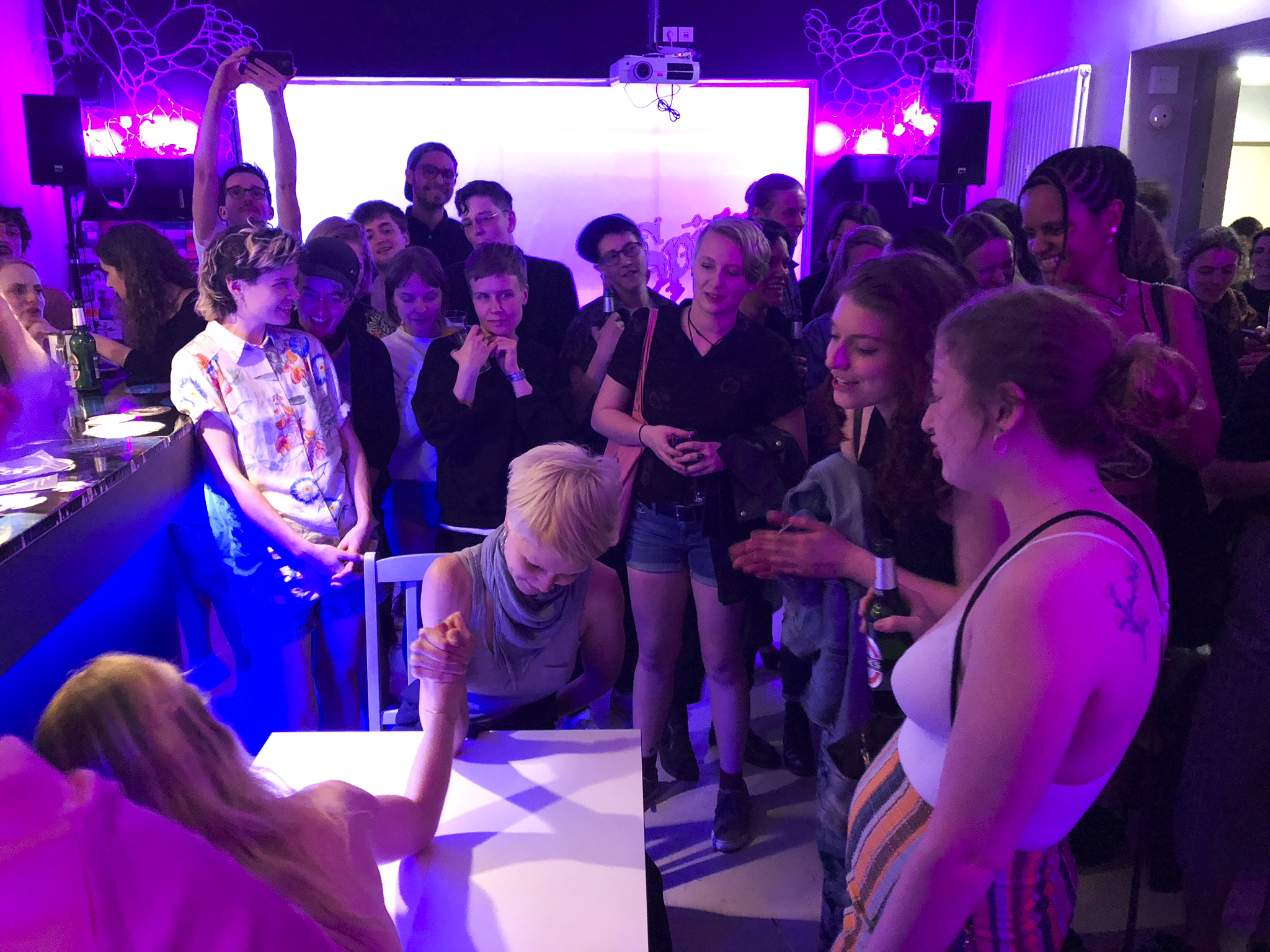
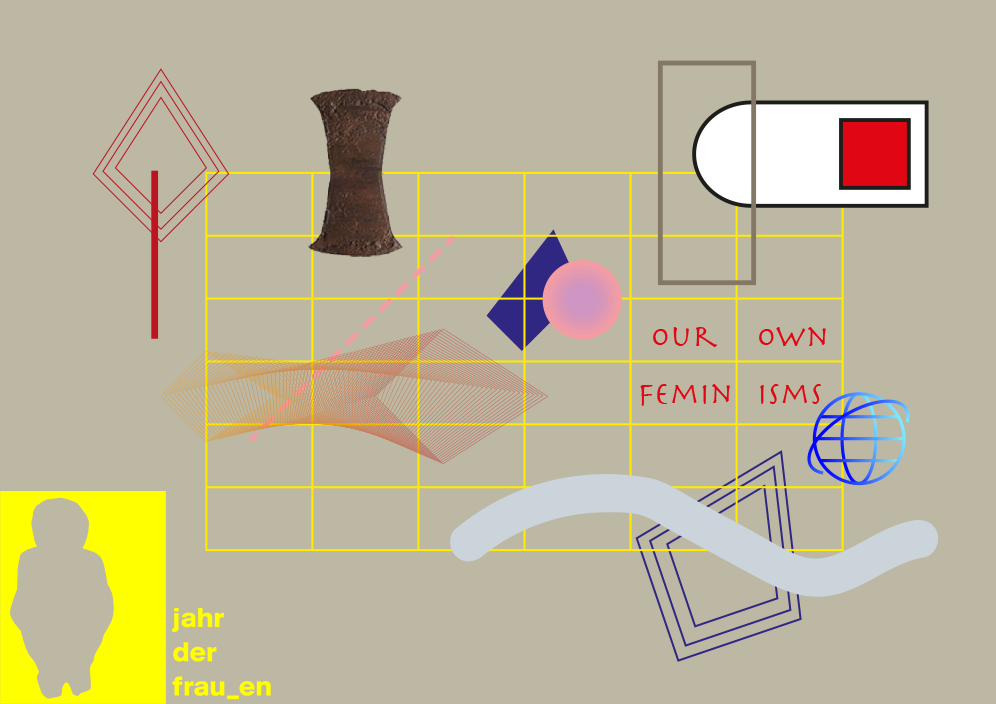
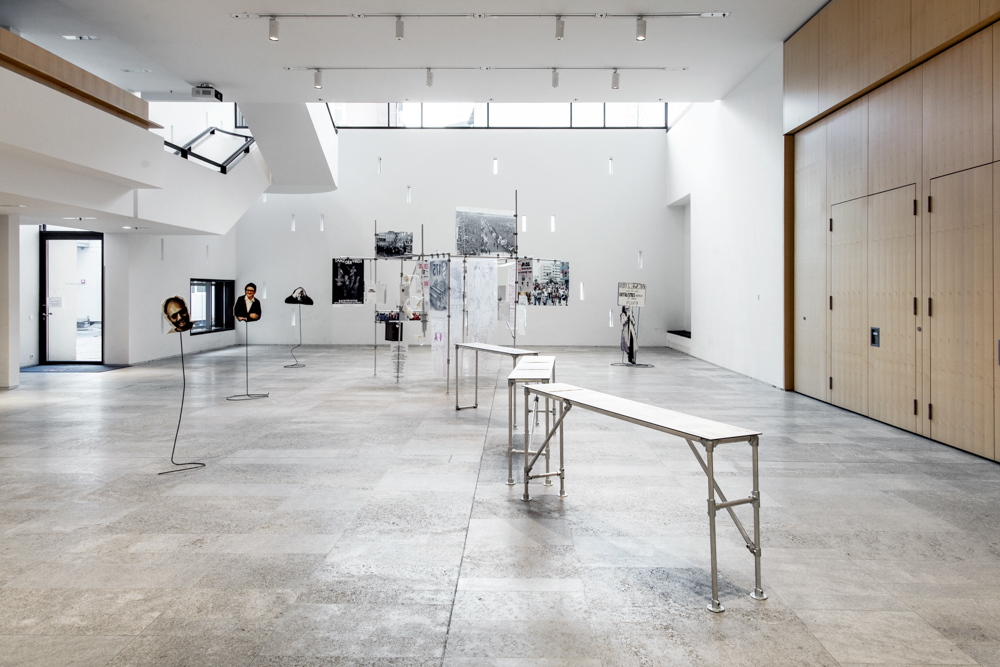
The "Year of the Women*" / "Jahr der Frau_en" was Schwules Museum Berlin's first ever programmatic focus on one theme and designed as a year-long queer-feminist intervention into the structural, economic and representational imbalances of the museum, the queer community and society at large. It consisted of 9 art, history and culture exhibitions, the Dyke Bar "Spirits", the "12 Moons Film Lounge", the lecture and workshop series "our own feminismS" as well as change management on all levels of the museum. The program offered space, time and resources for collective curating, the (un)learning around feminist her- and hirstories, intergenerational community discourse and the representation of FLINT* (female, lesbian, inter, non-binary, trans*) artists, film makers, activists, academics, historians, kinksters, sex workers and other members of the various scenes. It became the museum's most successful program in it's 30 year history (besides its collaboration with the German Historical Museum in 2015). The programming alongside the managerial work in the background attracted a whole new diverse audience, put Schwules Museum on the map of contemporary Berlin's art and cultural venues, led to an increasing amount of collaborations with other cultural instutions and academia as well as to an all queer-feminist board of directors and a much more diverse staff.
12 Moons site-specific installation, films/videos, Schwules Museum, Berlin, DE, 2018-2019
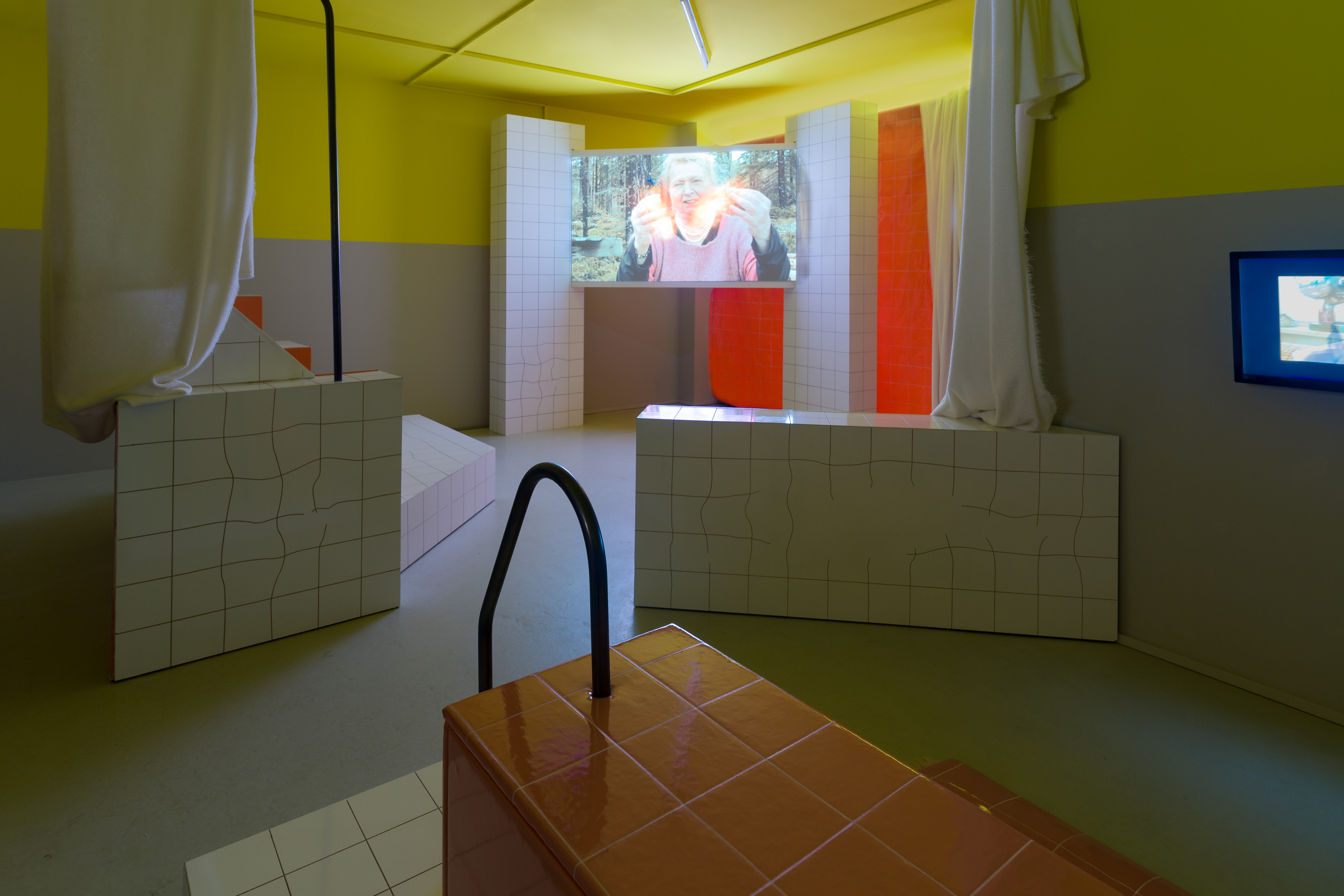
As an intervention into the intervention this year-long twelve-part program changing every new moon featured 65 films by feminist filmmakers and video artists in the 12 Moons Film Lounge. Conceptualized to ensure at least one female* voice being heard every minute of every day at the Schwules Museum Berlin (the Gay Museum) the program gave in- depth context to queer and feminist concerns. It both complemented the running exhibitions and addressed gaps and exclusions in the overall curation of the theme Year of the Women*.
artistic and healing practises
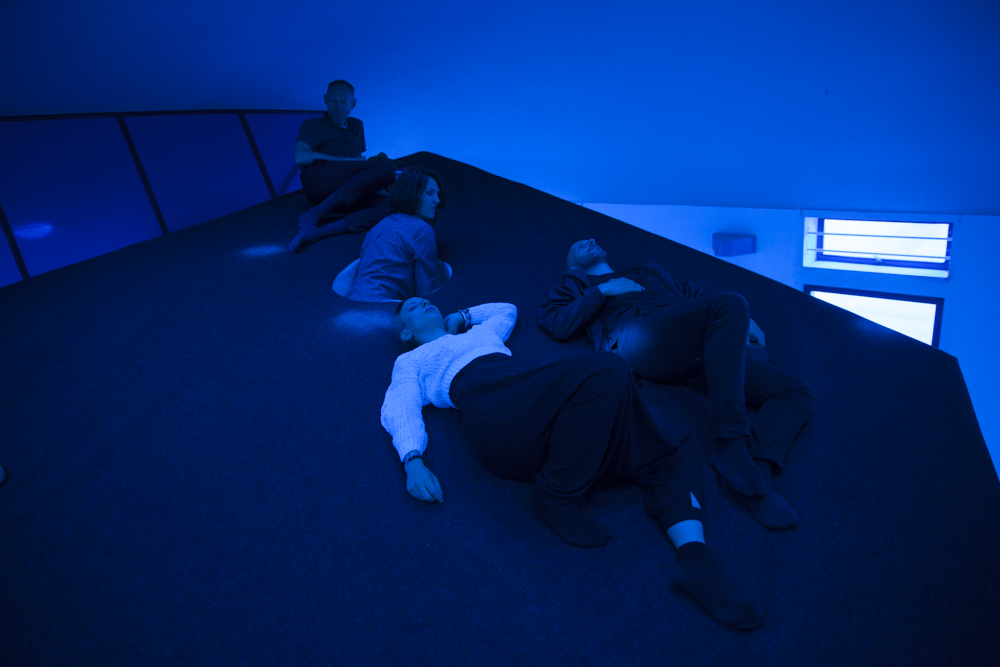
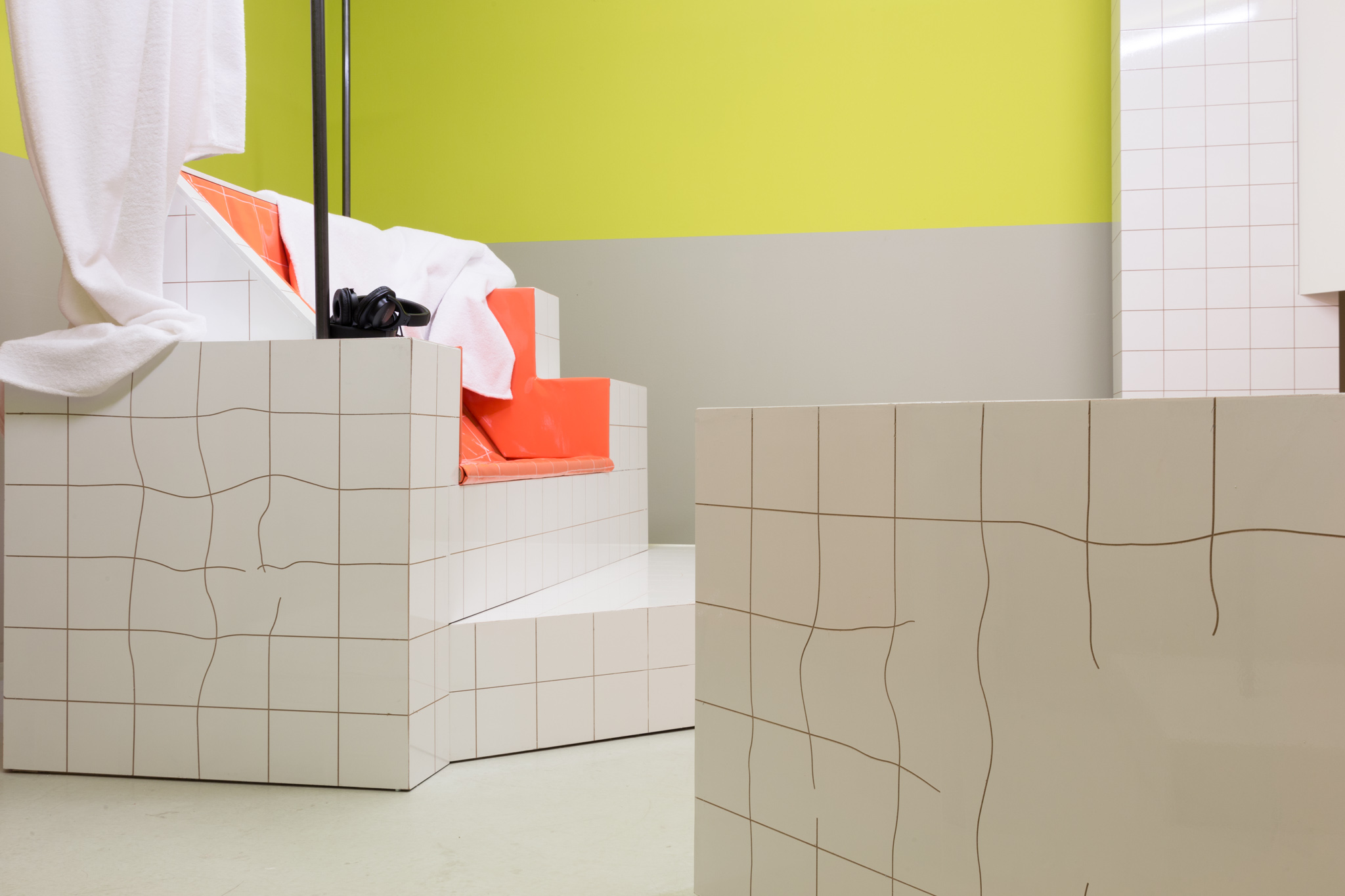
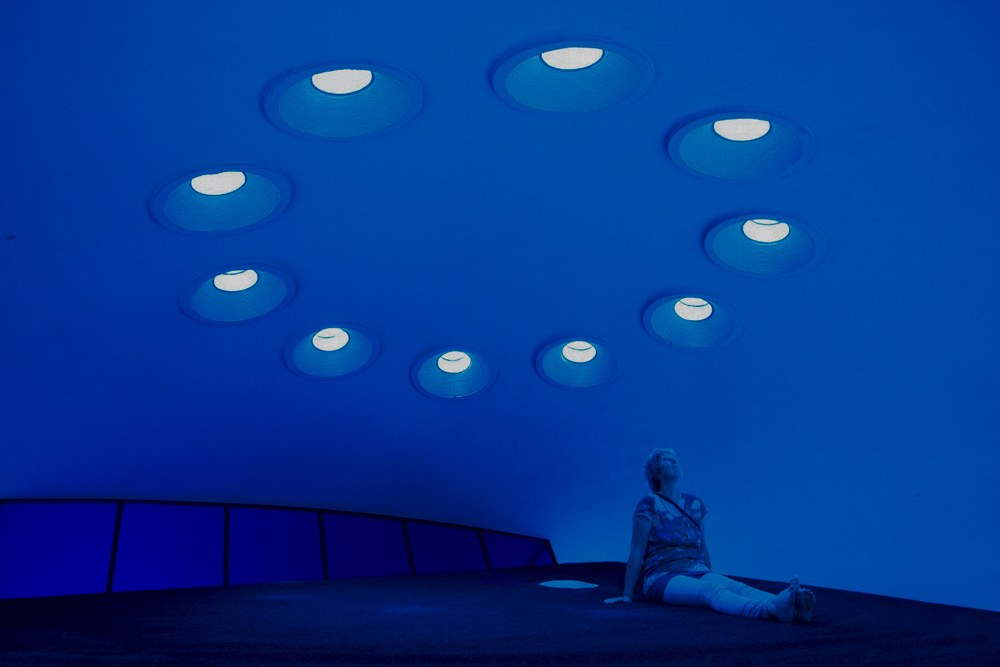
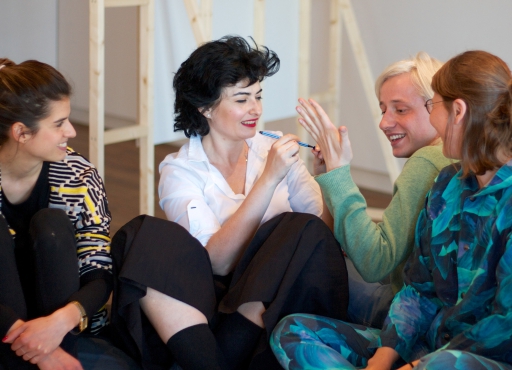
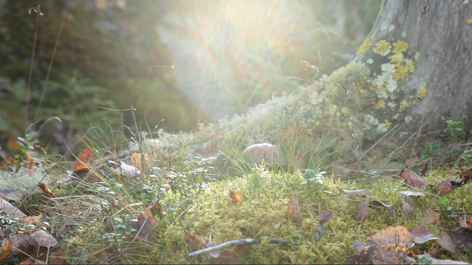
All I Wanna Do Is Sit In The Sun For A Whilesite-specific installation, quadrophonic sound, Burgerweeshuis, Amsterdam, NL, 2016
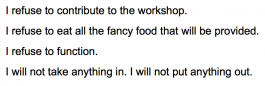
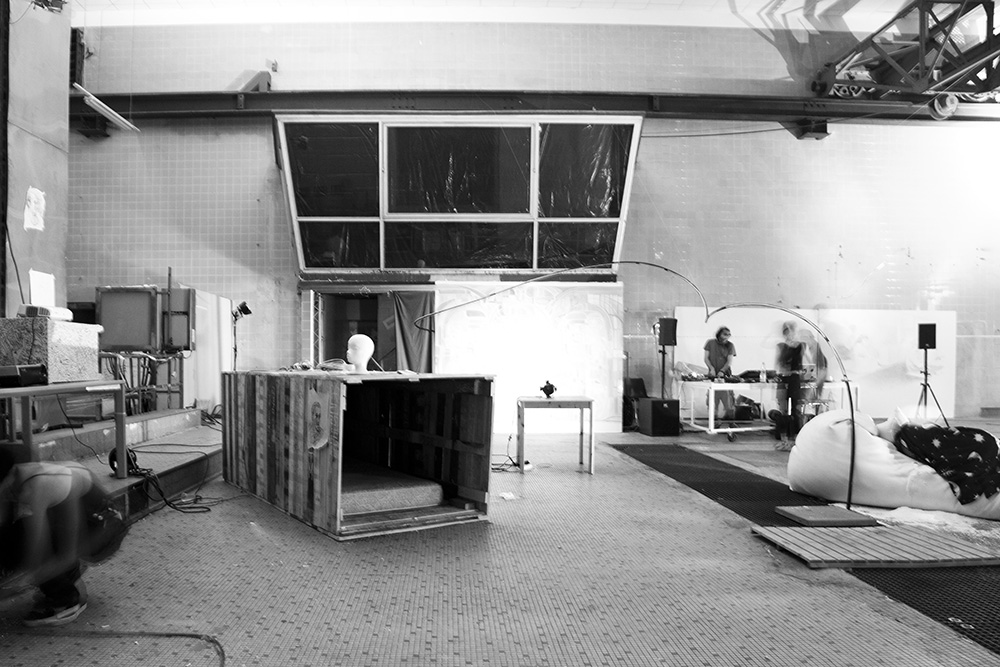
The immersive site-specific installation is a renunciation of further functioning in hegemonic systems, a grappling with the (self-) exploitation of the affective work of marginalized artists* in particular, and at the same time it is an ode to devotion.
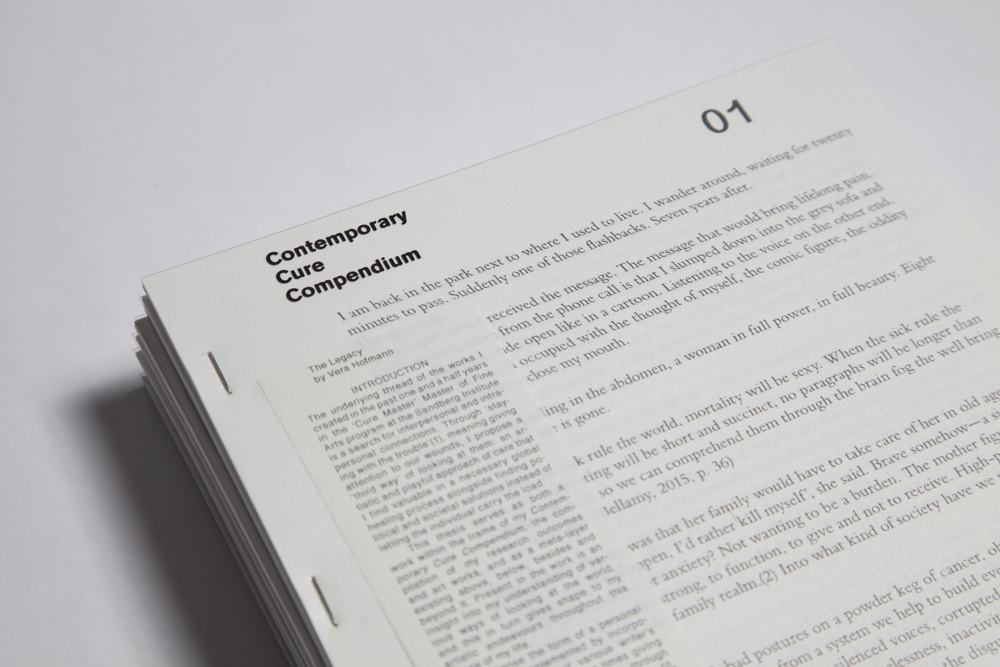
Contemporary Cure Compendium
Artistic research and multi-disciplinary works on alternative methods of healing, digging up ancient therapies, queering contemporary ones, appropriating, remixing and reformulating them in an artistic, empowering DIY approach. On a quest for cure, to achieve a higher sensitivity for social and political conditions, interpersonal and intrapersonal connections. visit website * selected works
BENTEN CLAY
BENTEN CLAY is a global corporation with a cross-disciplinary approach. The focus lies on the production of a long-term project titled Age of an End in which the appearance of the now is analyzed, assessing the limitation of natural resources, their implementations, as well as mechanisms of power and volatility inherent to the human pursuit of control. visit website * selected works
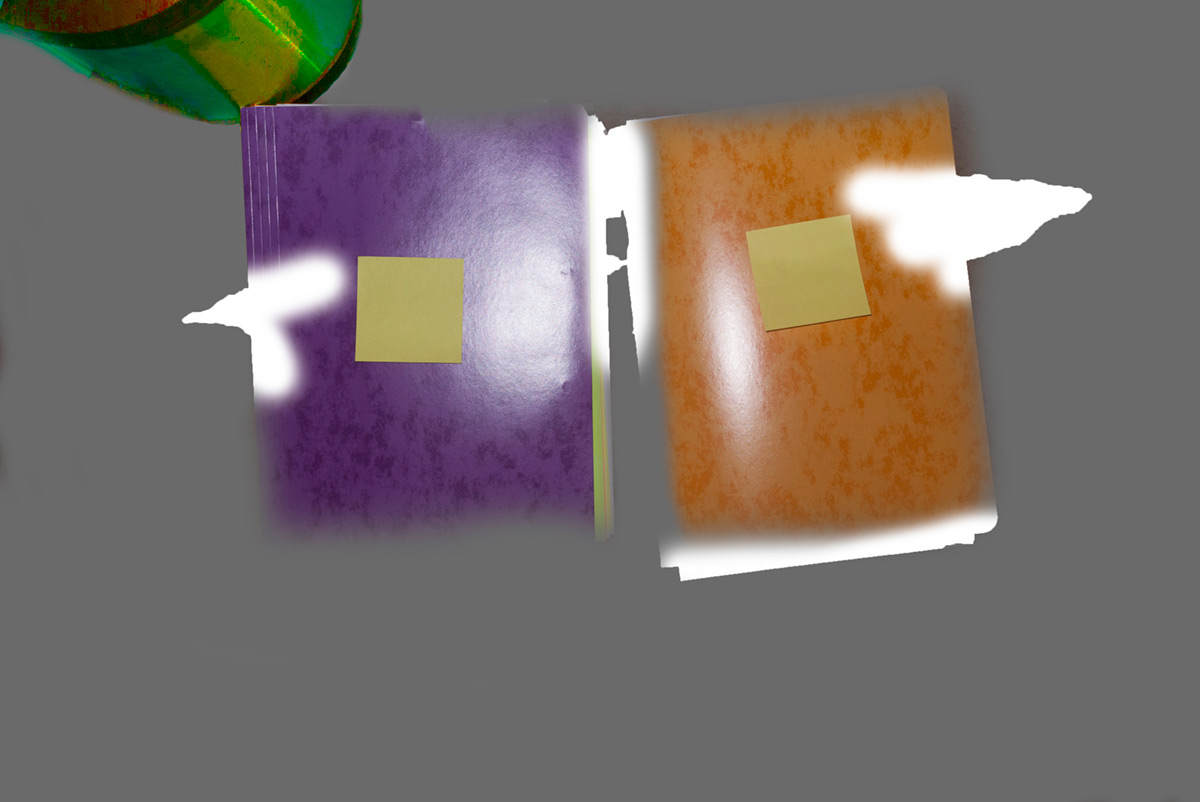
ART ON DEMAND
AOD was a collaborative participatory project. Its primary aim was to make art accessible by taking it out of the expected exhibition spaces and bringing it to targeted private spaces, creating tailor-made works that are intimate, useful and immersive.
NEOPLEX
5 newspapers with 8 pages each, 40x56 cm, newspaper holders, piezo prints, various sizes, 2009
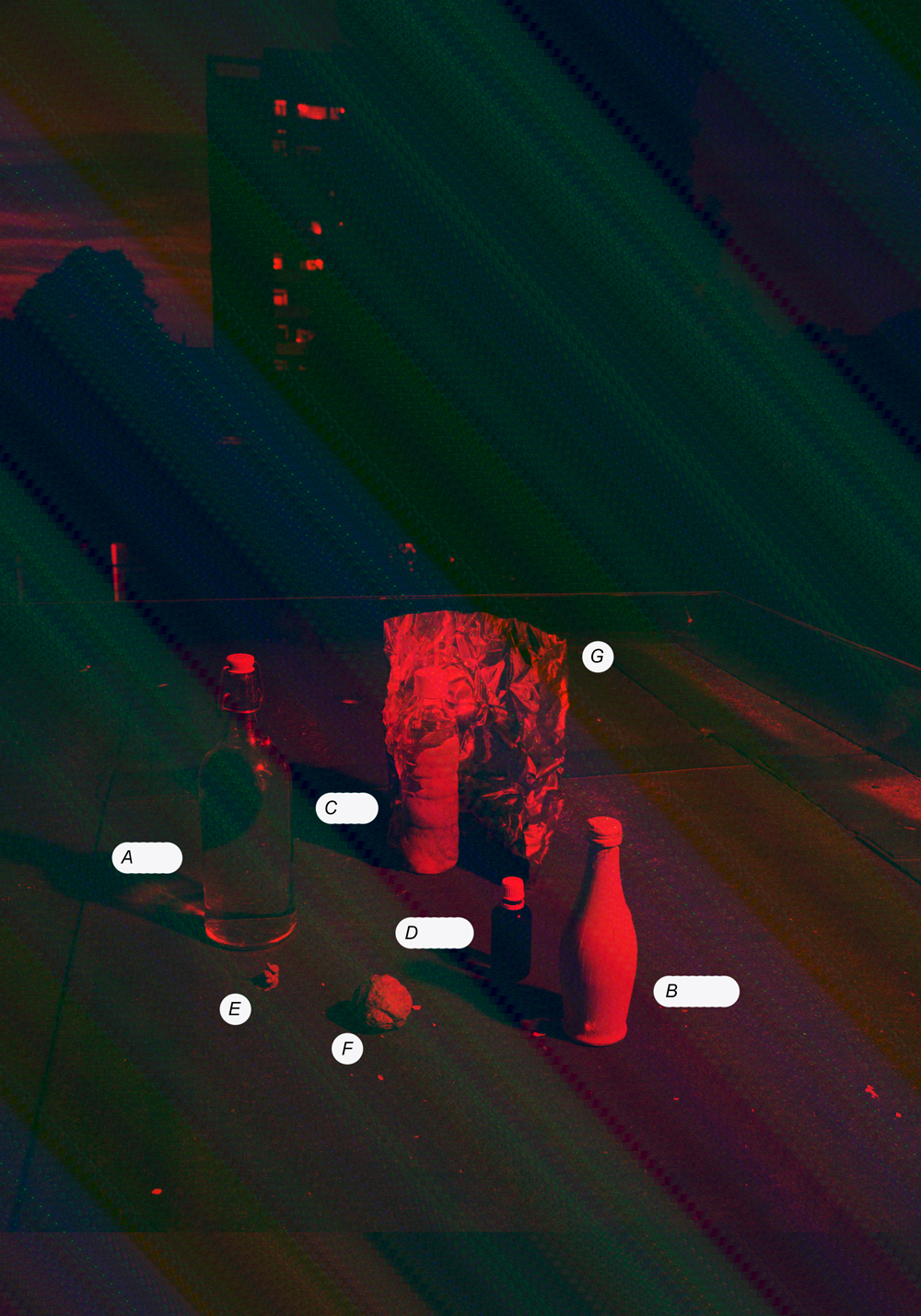
Reflections on the global financial crisis in a newspaper and photography series.